Bedding · Materials Guide
Wool Comforters Explained: Breathability, Insulation, and What to Compare
Wool can bring warmth without the heavy, sealed-in feeling some sleepers associate with thick bedding. But the fiber alone does not determine how a comforter performs. Fill quantity, construction, shell fabric, and care all shape the experience—and the right choice depends on the sleeper as much as the season.
Published October 9, 2026
Choosing a comforter often begins with a simple question: Will it keep me warm? A more useful one is: How will it feel through an entire night, as the room cools, the body warms, and moisture builds beneath the covers? Wool has earned a place in bedding partly because it can help answer both questions. Its fibers provide insulation while also taking up and releasing moisture, creating a different sleep environment from one built only around trapping heat.
That reputation is a starting point, not a guarantee. A wool comforter may feel light or substantial, temperate or too warm, depending on how much fiber it contains and how it is assembled. The cotton covering, stitching pattern, and care instructions matter, too. Comparing those details turns a broad claim about “natural temperature regulation” into a more practical assessment of comfort, upkeep, and fit for a particular bedroom.
This guide explains the material features to look for, how insulation works, and which questions can help narrow the field. It is not a promise that one fiber will solve every sleep concern. Rather, it is a framework for reading product specifications with care and choosing bedding that suits your habits and climate.
Why wool is used in bedding
Wool is a natural animal fiber with a structure that can trap pockets of air. Those pockets slow the movement of heat, helping create insulation. The same basic principle appears in many textiles: warmth depends not just on the material itself, but on the still air held within its structure. In a comforter, the fibers and their arrangement contribute to the layer between the sleeper and the room.
Wool is also hygroscopic, meaning it can absorb water vapor into the fiber. In bedding, that property is often described as moisture management. It does not mean a wool comforter is waterproof, nor does it guarantee that a sleeper will stay dry or cool. It means the fiber can interact with moisture in a way that differs from a material that mainly holds moisture on its surface. How noticeable that feels depends on the complete construction and the person using it.
These qualities help explain why wool bedding is often considered for sleepers who want warmth with some breathability. Yet the word “breathable” is not a precise performance rating. A dense fill, tightly woven shell, warm bedroom, or heavy duvet cover can change the outcome. The useful question is not whether wool is breathable in the abstract, but whether the comforter’s particular combination of fill, shell, and weight suits the way you sleep.
Insulation is more than a fiber label
Two comforters described as wool can behave differently. One may use a relatively light layer of batting; another may contain more fill and feel appreciably warmer. Fiber type gives useful context, but the amount of fill, its thickness, and its distribution are central to insulation. A product listing that names the fiber but offers little information about weight or warmth level leaves important questions unanswered.
Construction influences how consistently that insulation is spread. Stitching, quilting, or other compartmentalizing methods can help keep batting in place and reduce the chance of uneven areas. If fill shifts or compresses, parts of the comforter may feel thinner than others. Look for a clear description of how the interior is secured, and consider whether the pattern is designed to hold fibers evenly across the surface.
Shell fabric has a role of its own. Cotton is common in bedding because it offers a familiar hand and can be woven in different ways and weights. A shell that feels crisp and light may create a different impression from one that is smooth, dense, or substantial. The cover can affect airflow, drape, noise, and the way the comforter sits inside a duvet cover. Thread count alone does not describe every aspect of performance, so it is best read alongside fiber content, weave, and the maker’s construction details.
Room conditions matter as well. A well-heated bedroom, a cool drafty space, a warm climate, and a changeable shoulder season call for different levels of insulation. So do individual sleep preferences. People who tend to feel warm may want a lighter fill or a comforter designed for less warmth, while those who often feel cold may value a more substantial option. When available, use stated warmth categories or fill weights as comparison points rather than assuming that all wool comforters are equally warm.
What “temperature regulation” can—and cannot—tell you
Temperature regulation is a convenient phrase for the way bedding may help moderate the conditions under the covers. Wool’s insulation and moisture interaction can contribute to a comfortable balance, but bedding does not control body temperature independently of the sleeper or the room. Pajamas, mattress materials, humidity, ventilation, and personal physiology all influence whether a night feels comfortable.
That distinction is useful when reading marketing language. Claims that a material “keeps you cool” or “prevents overheating” can sound absolute, although comfort is individual and the product is only one part of the sleep environment. A more grounded expectation is that wool offers a particular combination of insulating and moisture-managing properties. Whether that combination feels better than another fill is something to assess in context.
For sleepers who are uncertain, begin with the conditions they know. Is the room cool for much of the year? Does the sleeper prefer a light covering even in winter? Is bedding usually layered, or is one comforter expected to do most of the work? These questions help translate an abstract feature into a useful warmth target.
The comparison checklist: six details worth checking
- Fill composition. Confirm whether the comforter uses wool alone or a blend. A blend may change the feel, weight, insulation, or care requirements. If the listing identifies additional fibers, consider what each contributes rather than treating “wool blend” as a complete description.
- Fill amount and warmth level. Look for a stated fill weight, warmth category, or other concrete guidance. If none is supplied, ask the retailer or manufacturer how the comforter is intended to be used. Fiber identity by itself is not enough to determine warmth.
- Fiber distribution and stitching. Check how the batting is held in place. A described stitch pattern can indicate an effort to maintain even distribution. No construction detail should be assumed from the word “quilted” alone; look for specifics where possible.
- Shell material and finish. Note the shell fiber, weave, and any finish information. The shell is in direct contact with other bedding and can affect feel and airflow. If you plan to use a duvet cover, account for that additional layer when considering the overall hand and warmth.
- Care instructions. Wool bedding may require different upkeep from a washable synthetic comforter. Read the label before buying, including any instructions for cleaning, drying, storage, or professional care. Convenience is part of suitability.
- Certifications and sourcing statements. If sourcing or processing is important to you, check exactly what a product’s certifications or claims cover. A certification relates to particular standards and should not be treated as proof of every environmental, animal-welfare, or health-related claim.
It can help to compare products in a simple table or notes app, recording shell, fill, warmth guidance, construction, and care. This reduces the temptation to make a decision based only on a soft product name or a single headline claim.
Care is part of the comforter’s real cost
A comforter is used nightly, but it does not necessarily need frequent washing. The right routine depends on the maker’s instructions and the way the bed is used. Some products are designed for spot treatment or professional cleaning; others may have different guidance. Never assume that a natural fiber can be washed at home simply because a product description calls it durable.
Before purchase, check whether the care method fits your household. Consider access to appropriate cleaning services, available storage space, and whether a duvet cover can help protect the comforter from everyday soil. A cover does not remove the need to follow the care label, but it can serve as a washable outer layer and make routine bedding changes easier.
Follow the specified drying method, too. Excessive heat or unsuitable handling can affect textile structure, shape, or finish. If the instructions are unclear, ask for clarification rather than improvising. Good care is not a minor afterthought: it influences how convenient the bedding feels over months and years of use.
Storage deserves similar attention. Keep seasonal bedding clean and fully dry before putting it away, and follow any manufacturer guidance about storage conditions. A breathable storage approach is generally preferable to sealing damp textiles away, but product-specific instructions take priority. These small steps can help preserve a comforter between seasons without turning maintenance into a complicated ritual.
Wool compared with other comforter fills
Comparisons are most useful when they focus on trade-offs, not rankings. Down, synthetic down alternatives, and wool all approach warmth in different ways. Down is often selected for its loft and warmth relative to weight. Synthetic alternatives can appeal to people seeking a non-down option or a product with more convenient care; their construction and instructions still vary. Wool is frequently considered for the pairing of insulation and moisture interaction. None of those broad descriptions tells the whole story of an individual product.
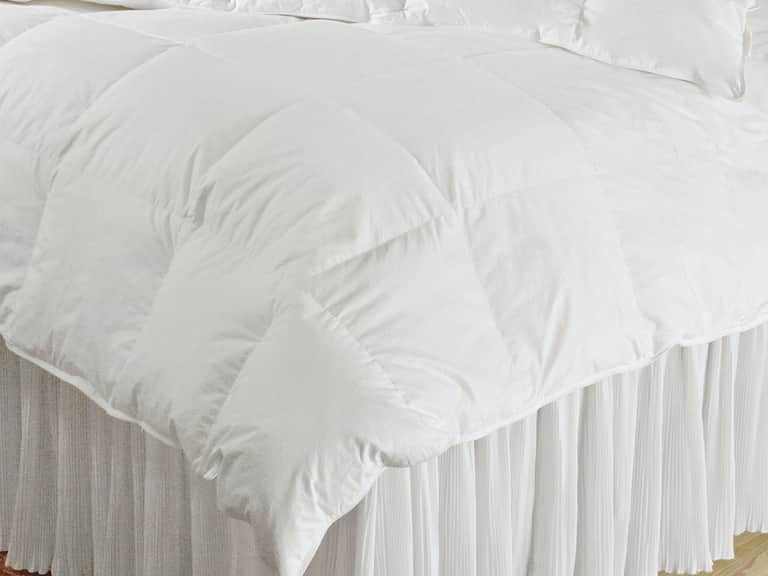
For example, the DownTown Company Alpine Loft Down Alternative Comforter provides a useful point of comparison for readers considering fill type. It uses microfiber fill, a 330-thread-count cotton cover, and 10-inch baffle-box construction, and is described as machine washable. Those details offer a different set of priorities from a wool comforter: a down-like synthetic fill and stated washability rather than wool’s particular fiber properties. It should not be mistaken for a wool product, and its listed features do not establish that one option is universally better.
When weighing alternatives, compare like with like where possible: warmth level, dimensions, shell fabric, construction, and maintenance. A lightweight wool comforter may not be comparable to a heavyweight synthetic option simply because both are labeled “all-season.” The intended warmth and the conditions of use are essential parts of the comparison.
Match the comforter to the room—and the sleeper
There is no single ideal wool comforter for every bedroom. Start with the room’s usual temperature and ventilation, then consider whether the bed is shared by sleepers with different warmth preferences. A shared comforter can be convenient, but it may not satisfy everyone equally. Separate layers or a lighter base with an additional blanket can make adjustment easier than relying on a single, fixed warmth level.
Think about how the comforter will be used through the year. Some households rotate bedding by season; others prefer one adaptable setup. A medium-weight comforter may be practical in a relatively stable climate, while seasonal layering can offer more control where temperatures change sharply. Do not assume that a product labeled “year-round” will feel the same in every home; the phrase is a general positioning, not a measurement of your bedroom’s conditions.
Size matters to comfort as well as appearance. A comforter should work with the mattress and bed arrangement, allowing enough coverage for the way sleepers move and the way the bed is made. Check the product’s actual dimensions rather than relying solely on labels such as queen or king, which can vary. If a duvet cover is part of the setup, confirm that its dimensions are compatible with the insert.
Finally, take personal sensitivities and preferences seriously. Some people care most about a natural fiber; others prioritize easy washing, a specific hand feel, or a particular warmth profile. Wool is not automatically the right answer for someone seeking natural bedding, just as a synthetic fill is not automatically the right answer for everyone who wants easy care. The best choice is the one whose materials, construction, and upkeep match the household’s priorities.
Common assumptions to leave behind
- “Wool always feels hot.” Warmth depends on fill amount, construction, shell, room temperature, and personal comfort. Fiber alone cannot settle the question.
- “Breathable means cool.” Breathability describes a feature of the material system, not a guaranteed sleeping temperature. A breathable comforter can still provide substantial insulation.
- “Natural means low maintenance.” Natural fibers have specific care needs. Read the label and decide whether the required routine is practical for you.
- “All wool comforters are alike.” Wool source, fill amount, batting structure, shell, and finishing all matter. A broad category label hides meaningful differences.
- “A higher thread count proves better performance.” Thread count is only one specification. Weave, fiber, construction, and comforter design are also relevant.
A considered choice, not a universal solution
Wool comforters appeal because they bring insulation and moisture-managing properties together in one familiar bedding layer. That combination can be valuable, but it is not a shortcut around the practical questions that determine everyday satisfaction. How much fill is present? How is it secured? What does the shell feel like? What warmth level does the maker recommend? Can the care instructions fit your routine?
The strongest comparison begins with those answers, then brings in the specifics of the bedroom and the sleeper. For someone who values wool’s material qualities and is comfortable with its care requirements, a well-described wool comforter may be a compelling option. For another household, a different fill may better meet priorities around maintenance, sensitivity, or price. The category is broad; the decision can be precise.
In the end, a comforter is not only an object that provides warmth. It is a layer used in a changing environment, night after night. Evaluating wool by its fill, construction, shell, and care—rather than by a promise alone—makes it easier to choose bedding that feels considered, practical, and suited to the way you actually sleep.